
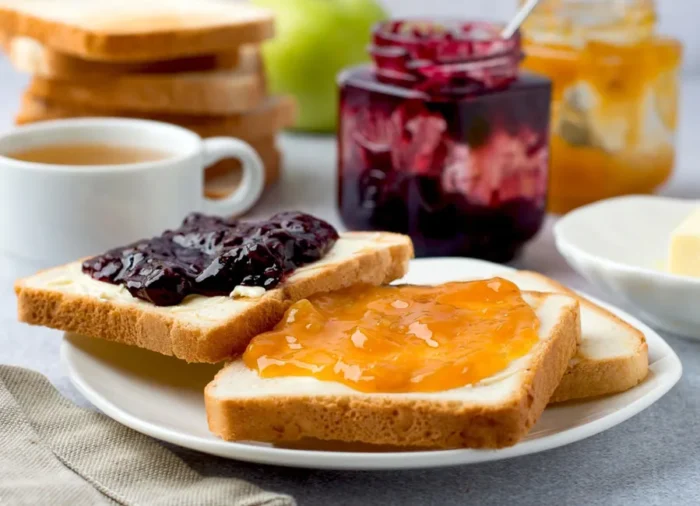
Fruit-based sweets, indispensable on breakfast tables, are divided into two main groups: jams and marmalades. Both are popular for preserving fruit for longer periods, but they differ in production methods, textures, and uses. So, what are the differences between jam and marmalade? Here is a comprehensive comparison.
What Is Jam?
Jam is a fruit preparation made by cooking fruit chunks with sugar. It is characterized by a chunky texture where the fruit pieces remain visible. Jam offers a rich flavor since it uses the fruit’s natural sugars and structure.
Characteristics of Jam
Structure: Contains visible fruit chunks. Texture: Thicker and more solid. Ingredients: Fruit, sugar, and often lemon juice. Use: Perfect with bread, toast, or added to desserts. Popular Types: Strawberry jam, apricot jam, cherry jam.
What Is Marmalade?
Marmalade is made by boiling the fruit into a homogeneous paste, giving it a soft and smooth texture. In traditional recipes, marmalade often uses citrus fruits such as bitter orange or lemon (with peel). Recently, however, marmalades from many other fruits have become popular.
Characteristics of Marmalade
Structure: The fruit is uniformly blended, forming a smooth paste. Texture: Softer and creamier. Ingredients: Fruit (and often the peel), sugar, and water. Use: Ideal for breakfast tables or as a spread. Popular Types: Orange marmalade, cornelian cherry marmalade, quince marmalade.
Differences Between Jam and Marmalade
1. Production Method
Jam: Fruit is cooked with sugar in chunks. Marmalade: Fruit is boiled and puréed into a homogeneous paste.
2. Texture and Structure
Jam: Chunky, fruity texture. Marmalade: Smooth, creamy, and soft.
3. Preferred Fruits
Jam: All types of fruit — especially soft ones (cherry, strawberry, apricot). Marmalade: Traditionally citrus (orange, lemon). Also cornelian cherry, quince, or apple varieties.
4. Sweetness Level
Jam: Usually sweeter, with a higher sugar ratio. Marmalade: Sugar ratio may be lower and the taste more balanced.
5. Aroma and Taste
Jam: Reflects the intense flavor of the fruit. Marmalade: Often has a more complex flavor thanks to the peel and pulp.
6. Uses
Jam: Ideal on breakfast tables, in desserts, or as a decorative filling. Marmalade: Perfect on bread, toast, or added to pastries.
7. Nutritional Value
Jam: Since it does not contain the fruit peel, it may offer less fiber. Marmalade: Contains more antioxidants and fiber when the peel is included.
Which Should You Choose?
Both jam and marmalade are delicious options for the breakfast table. Choose jam if you want intense fruit chunks; choose marmalade for a smoother and richer texture. Both can be enjoyed side-by-side, offering a wide flavor variety.
Homemade Jam and Marmalade
Making jam or marmalade at home allows control over sugar content and additives — for a healthier option. Also, when made in small batches, the flavor and quality are of a much higher level.
Sugar-Free Options
Sugar-free jams and marmalades are becoming increasingly popular. Sweetened only with the natural sugars in fruit, they are the best choice for those looking for a healthier lifestyle or watching blood sugar.
Jam and marmalade are both healthy and delicious flavors that deserve a place on our breakfast tables. Each stands out in different ways — jam with chunks, marmalade with a smooth texture. If you can, choose homemade or additive-free products for the healthiest experience. Whichever you prefer, both offer a wonderful way to reflect the fruit’s beauty on your table.