
Olive oil is one of the indispensable elements of a healthy life. In recent years, unfortunately, fake olive oil, which provides countless benefits to human health, has also been produced and can pose serious health risks when consumed. If you are suspicious of whether the olive oil you buy is real or not, you can understand this with simple tests you can apply at home. You can discover the practical methods we have prepared for you to choose the quality and genuine olive oil products. Here are the tips for understanding whether olive oil is real or not:
Things to Consider When Choosing Pure and Natural Olive Oil
1. Its smell
Genuine olive oil has a fresh, fruity scent, but can also offer a pleasant blend of grassy, fresh olive, and sometimes slightly spicy notes. However, if you smell something musty, metallic, or soapy , it’s a sign that the olive oil is fake or has gone bad.
- Fresh Grass and Fruit Aroma: A scent specific to olive fruit is felt.
- Smell of Refined Oils: Neutral or strong odors may indicate fake or adulterated oils.
2. Taste
Real olive oil has a slightly bitter and burning taste that fills the palate. When a quality olive oil is tasted, a slight bitterness is felt on the sides of the tongue and a burning sensation is felt in the throat. This burning sensation is not related to the acidity of the olive oil; however, it indicates the high antioxidant content. The high antioxidant content is of great importance in terms of the restorative and rejuvenating effects of olive oil as well as its health benefits.
Olive oil should not have foreign tastes such as dampness, mold, mud smell or vinegary sourness; such products should be avoided.
- Slight Burning: Genuine olive oil leaves a slight burning sensation in the throat. This is an indication of the antioxidants it contains.
- Persistence in the Mouth: The taste is felt for a long time and does not leave an oily feeling.
3. Color
The color of olive oil can vary depending on the type and ripeness of the olives:
- Natural Color Variety: Natural colors from golden yellow to dark green are normal.
- Homogeneous Color: It can be opaque or bright in color.
When buying olive oil, it is a common misconception to decide only by looking at its color. Color is not a factor that determines the quality of olive oil. Due to this misinformation, many olive oils with added colorants are preferred in the market with the perception that “if it is dark, it is healthy.” However, in reality, the color of olive oil is not a criterion that determines quality.
4. Freezing Test in Cold
Genuine olive oil will partially or completely harden when left in the refrigerator for a few hours.
- Freezing Feature: Natural olive oil can solidify at low temperatures.
- Mixed Oils: Impure oils will not set or solidify completely.
Note: This test is not always conclusive; the way the oil is produced can affect its freezing behavior.
6. Water Test
Olive oil floats on water because it is lighter than water. When you drop a few drops of olive oil into a glass of warm water, if it is pure olive oil, it will first bubble and stay on the surface. However, if the olive oil stays on the surface for a while and then mixes with the water or sinks to the bottom, this may indicate that it is a fake or mixed product.
7. Price and Packaging
Genuine olive oil is usually more expensive because its production costs are higher:
- Low Prices: Very cheap oils are often adulterated or fake.
- Dark Bottle: Quality olive oils are generally sold in dark bottles that do not transmit light.
8. Label Information
The information on the label gives a clue about the quality of the oil:
- Cold Pressed: Olive oils pressed below 27°C are considered to be of higher quality.
- Acidity: The acidity of genuine extra virgin olive oil should be below 0.8% .
- Origin Information: Where it is produced must be clearly stated.
9. Laboratory Analysis
For definitive results, laboratory testing may be performed:
- Free Fatty Acidity: Extra virgin olive oil should have an acidity of less than 0.8% .
- Peroxide Value: A low peroxide value indicates the freshness of the oil and its resistance to oxidation.
10. Shopping from Traditional Production Sites
Olive oils from olive growing regions are generally safer.
- You can shop from local farmers or trusted brands.
11. Permanence and Shelf Life
Genuine olive oil should be consumed fresh:
- Freshness is Important: It should be consumed within 1-2 years from the production date.
- Stale Taste: Oils that are kept for a long time lose their flavor.
In order to understand real olive oil, it is important to evaluate its taste, smell, color and physical properties together. If you are not sure, buying directly from the producer or turning to well-known brands would be the best choice.
Where to Buy Genuine Olive Oil?
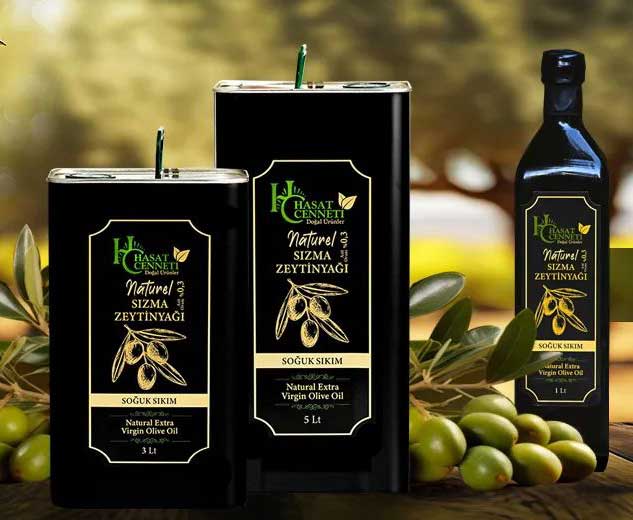
In your search for quality and real olive oil, it is very important to shop from reliable addresses. Hasat Cenneti online sales store offers you natural olive oil products produced from olives collected in season by carefully selected producer brands. In the olive oils category, you can find quality and genuine olive oil varieties at affordable prices. You can take a look at the products below to buy quality olive oil at the most advantageous prices: