
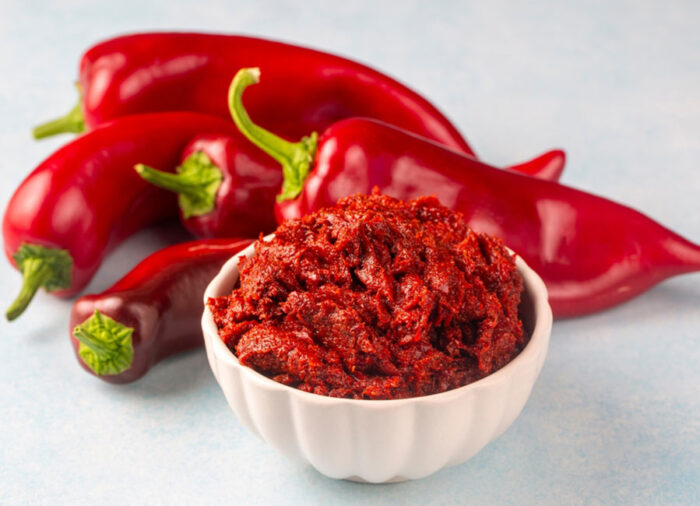
Red pepper paste, an indispensable ingredient in Turkish cuisine, adds unique flavor and aroma to dishes. However, industrially produced pastes often contain additives and preservatives. Natural red pepper paste stands out as both a healthier and more delicious alternative. So, how is natural red pepper paste produced? Here is the process step by step.
Steps in the Production of Natural Red Pepper Paste
1. Selecting the Peppers
The most important step is the selection of the peppers themselves. Fresh, fully ripe red peppers form the basis of the best paste. Grown organically, without chemicals, they yield the healthiest and most flavorful paste.
2. Washing and Sorting
Peppers are washed thoroughly to remove dust and residue. Stems and seeds are removed. Only healthy, defect-free peppers are used to preserve the paste’s quality.
3. Grinding
Cleaned peppers are ground until they reach a fine texture. This traditional stage is often done by hand or with a mill. The paste-like consistency achieved is the foundation of the paste’s rich flavor.
4. Sun-Drying
The ground paste is spread onto clean cloths or trays and left to dry in the sun. Sun-drying is a natural process that helps preserve the aroma and taste. This process usually takes 7 to 15 days, during which the paste is stirred regularly.
5. Salting
Once the paste reaches the desired consistency, natural rock salt is added. Salt supports the paste’s shelf life while enhancing its taste. Using natural salt makes the paste even healthier.
6. Storage
The finished paste is placed into sterile glass jars. To extend shelf life, a thin layer of olive oil is poured on top. The jars, tightly sealed, are stored in a cool, dry place.
Advantages of Natural Red Pepper Paste
1. Additive-Free
Unlike industrial pastes, natural pepper paste contains no chemical additives or preservatives. It is a completely natural product.
2. Nutritional Value
Rich in vitamin C, antioxidants, and minerals, it supports the immune system. Its high vitamin C content is especially beneficial in winter months.
3. Unique Flavor
Traditional production methods give the paste a deeper, more authentic flavor. It elevates the taste of dishes to a whole new level.
How Should Natural Pepper Paste Be Stored?
Natural pepper paste is very sensitive to shelf life. Once opened, it should be kept refrigerated. To preserve freshness longer, a layer of olive oil on top can be added periodically. Under proper storage, the paste can last for many months.
Natural red pepper paste, when produced traditionally, is a highly special ingredient in terms of both flavor and health. As an additive-free, natural food, it adds a unique dimension to your meals. Prepared at home, it can become the healthiest and most authentic version. If you want the taste of pepper paste in its purest form, always prefer natural production.